

We Are The Weather prompts for a daring action plan to save the planet but fails to deliver a compelling argument for changing. Throughout the book, Foer tries to strike a balance between nothing matters and everything matters, but inevitably only brings one argument to the kitchen table: do not eat animal products before dinner.
Foer makes a valid argument about the balance of “doing nothing” and “doing everything.” Early in the book, he shares how polio was eradicated in the United States. Franklin D. Roosevelt helped create the March of Dimes in 1938, which became the primary funding source for polio research. One recipient of such funding in 1952 was Jonas Salk. After three years of thorough testing, Salk’s vaccine was declared safe and effective, a cure for polio. Salk had done “everything,” dedicating seven years of his life to medical research and vaccine development.
But polio vaccination rates were low in 1955, due to a public misconception that only infants and toddlers could be stricken with polio. Immunization rates sat at 0.6 percent among teenagers. While the disease mainly affects those under the age of 5, according to the World Health Organization, any unvaccinated individual can contract it. What use is a vaccine no one uses?
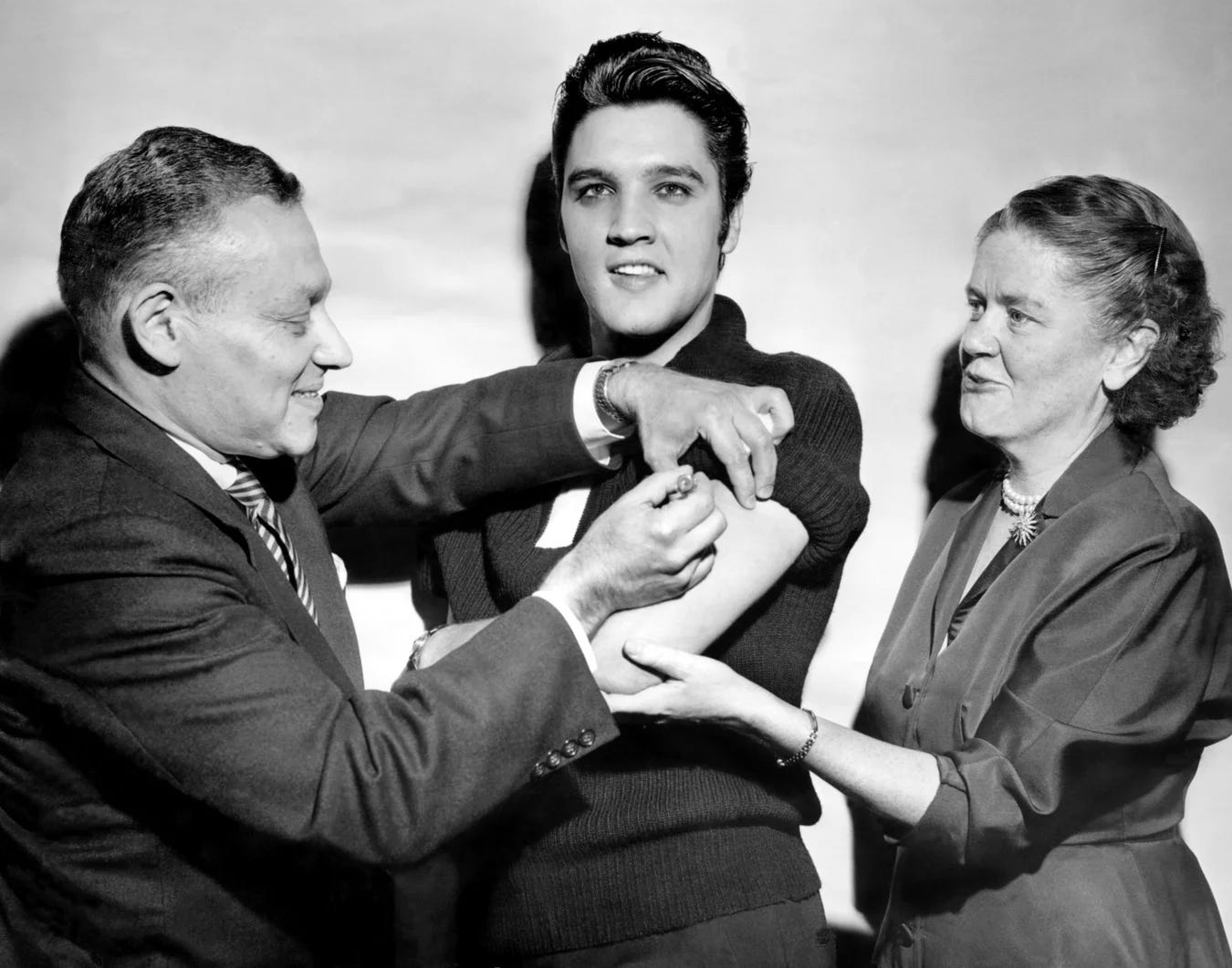
On October 28, 1956, an up-and-coming musician named Elvis Presley was preparing for his second appearance on The Ed Sullivan Show. Before the show went live, Elvis rolled up a sleeve for a New York state official to stick a needle loaded with the polio vaccine in his arm. Elvis flashed a smile for the press who captured the event. Six months later, American youth vaccination rates for polio skyrocketed to 80 percent. Elvis, who compared to Salk did nothing, was also instrumental to the eradication of the disease.
Foer focuses on the duality: a few may have to sacrifice everything to make meaningful change in the world, but many of us have to sacrifice nothing to ensure change.
From there, Foer’s argument weakens by honing in on one way to fight climate change: removing animal products from breakfast and lunch meals. Animal products (meat, eggs, milk, etc.) contribute to 35% of all greenhouse gas emissions according to a 2023 research paper. This small sacrifice may be too great an ask for most people. It’s one thing to get a small jab into your arm once, or to support soldiers fighting in World War 2 with food rationing, which is another example he shares. Removing a significant contribution to our diet, especially for Americans, may be too great a sacrifice. Foer admits many times throughout the book that he has not fully committed to this dietary switch.
There are many actions individuals can take to help the planet. And Foer is right, sacrificing “everything” and sacrificing “nothing” will be necessary of humanity. But giving a bold challenge without a path forward is inadvisable at best. Perhaps the challenge would feel feasible if Foer provided a scaffold about how to elimate or significantly reduce animal products from one’s diet, which is the approach of the cookbook Protest Kitchen by Carol J. Adams takes.
This book does have me thinking about my animal product in take, but it leaves me without a tangible way to implement the idea. I'm left wondering what other kinds of “nothings” can I sacrifice for the planet.

“We Are The Weather,” written by Jonathan Safran Foer, can be found wherever books are sold including Bookshop.